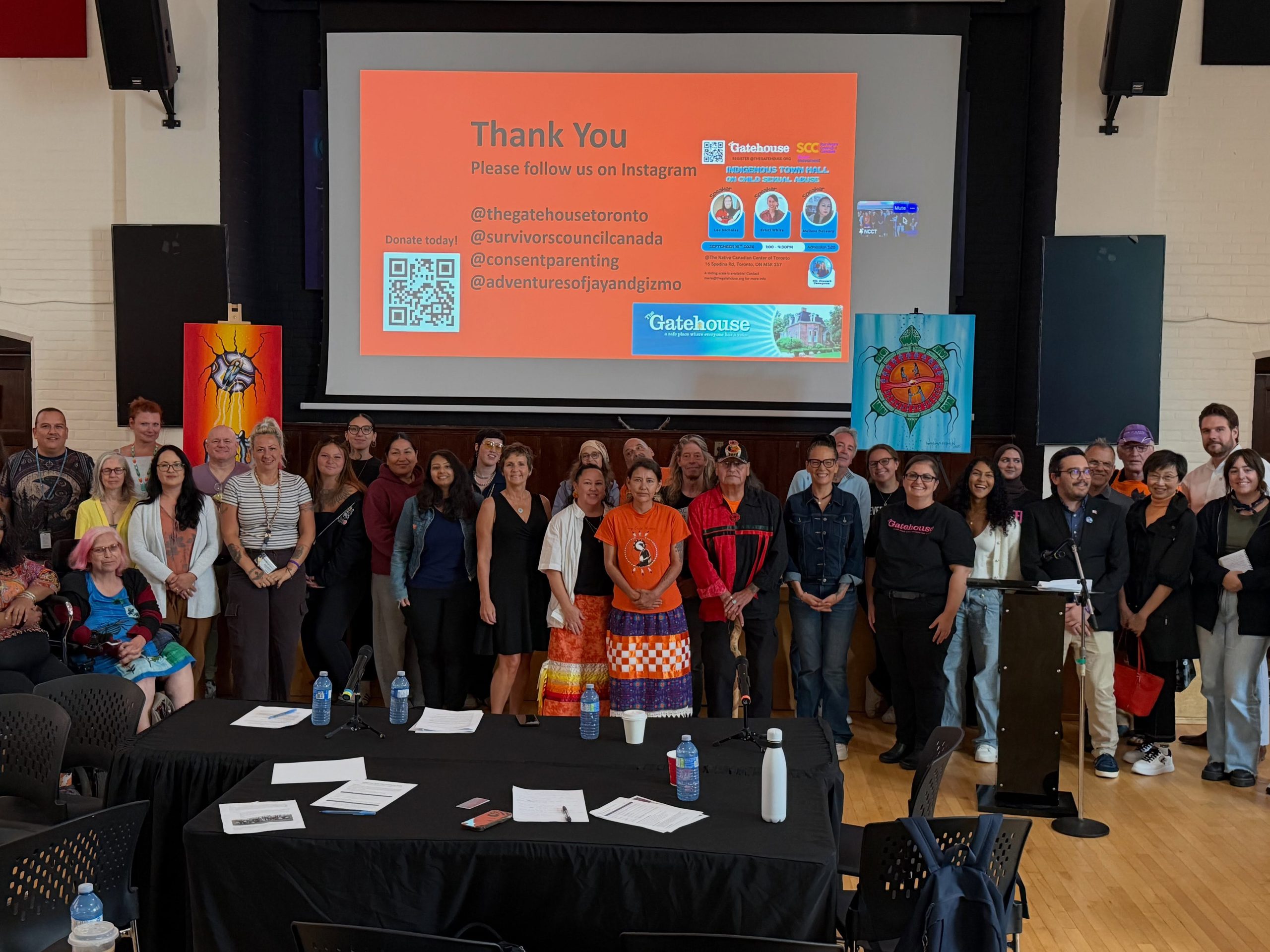
On September 16, 2026, The Gatehouse and the Survivor Council of Canada welcomed 66 participants to a hybrid Indigenous Town Hall on Childhood Sexual Abuse. Hosted at the Native Canadian Centre of Toronto and online, the gathering created space for Indigenous voices, lived experience, community knowledge, and practical recommendations for healing, prevention, and systems change. The Town Hall brought together survivors, Indigenous community members, allies, service providers, students, staff, and community supporters. Forty-five people participated in person and 21 joined online, making it possible for voices from different locations and experiences to contribute to the conversation. Listening to Indigenous lived experience and community knowledge Featured speakers Kristi White, Leo Nicholas, Melissa DeLeary, and Rosalia Rivera, shared knowledge and perspectives that helped ground the day’s conversations. Stewart Thompson served as MC, while The Gatehouse Executive Director, Maria Barcelos welcomed participants to share in this safe and inclusive space. Rosalia Rivera also presented the 2026 Out of the Shadows Index, connecting the community discussion to a broader policy framework for preventing and responding to sexual violence against children and adolescents. The Index presentation examined governance and accountability, prevention, healing, and justice. Canada’s lowest score among these four areas was in healing, reinforcing the urgency of expanding medical care and integrated survivor services in rural, northern, and Indigenous communities, as well as improving access to legal support. Community sharing… Through facilitated discussions, participants identified barriers that Indigenous survivors continue to encounter within healthcare, policing, counselling, victim services, legal systems, and other institutions. Distrust grows when people are dismissed, disbelieved, misunderstood, or asked to navigate services that do not reflect Indigenous histories, cultures, and lived realities. Participants also spoke about the importance of restoring and sustaining Indigenous cultural practices that colonization attempted to disrupt. Examples of culturally grounded healing included cedar footbaths, sweetgrass brushing, connection with nature, and nurturing practices rooted in culture and community. The discussions emphasized that Elders, traditional healers, Indigenous practitioners, and Indigenous women’s services need stable financial, emotional, and practical support. Healing spaces must also be strength-based. Survivors need opportunities to speak not only about harm, but also about resilience, identity, cultural connection, leadership, and hope. Prevention, safety, and inclusion Participants called for prevention education in schools and community settings, with meaningful involvement from Elders, aunties, uncles, and community knowledge holders. Education must also acknowledge the continuing effects of colonization and the Sixties Scoop. Two-Spirit inclusion emerged as an essential priority. Data, language, counselling, facilitation, and community spaces must reflect Two-Spirit experiences. Participants also discussed culturally safe support systems, community response protocols, survivor circles, and anonymous ways for survivors to seek help and information when reaching out openly does not feel safe. Building sustainable community responses, helping Indigenous survivors of childhood sexual abuse. Some discussions focused on the gap between how community programs need to operate and how funders expect them to be structured and measured. Participants noted that funding models often emphasize numerical outputs while overlooking the lived realities behind the numbers, particularly in remote and geographically isolated communities. The group explored collaboration and community-led sustainability, including shared training, resource partnerships, social enterprise, community food gardens, and initiatives that reinvest revenue locally. These ideas centered community ownership, local capacity, and responses shaped by actual community needs. Turning survivor knowledge into action A consistent message ran throughout the Town Hall: Indigenous survivors and communities must have meaningful representation in the programs, policies, funding decisions, and systems that affect them. Lived experience is not simply testimony. It is knowledge that can guide prevention, healing, education, professional practice, advocacy, and policy. These insights will help inform The Gatehouse Survivor Knowledge Network, an emerging initiative designed to ethically connect survivor knowledge with research, frontline practice, education, and systems change. As the Network develops, Indigenous survivor knowledge must be stewarded with respect for culture, consent, community, survivor-centred governance, and data protection. Continuing the work together The Town Hall showed what becomes possible when people are invited into an environment grounded in cultural safety, respect, inclusion, and survivor leadership. The recommendations gathered through the event will support future advocacy, education, partnerships, funding proposals, community engagement, and survivor-informed resources. The Gatehouse and the Survivor Council of Canada extend sincere thanks to speakers Kristi White, Leo Nicholas, and Melissa DeLeary; presenter Rosalia Rivera; MC Stewart Thompson; facilitator Erin Alexandra; staff members Maria Barcelos and Jasmine Lem; student volunteers Naeema, Joshua, and Caitlyn; and every survivor, participant, volunteer, partner, and community supporter who contributed to this gathering. We are also grateful to the Brave Movement and Together for Girls for supporting this important event. Learn more and connect with The Gatehouse: www.thegatehouse.org Learn more about Survivor Council Canada https://survivorscouncil.ca/ Learn more about the Out of the Shadows Index https://www.bravemovement.org/campaigns/out-of-the-shadows Connect with Kristi White https://www.jayandgizmo.ca/ Connect with Rosalia Rivera https://www.consentparenting.com/ The Gatehouse • Survivor centered support education and advocacy. Watch the Town Hall Video on our YouTube channel! Thank you to our event sponsor A Silent Cry—Creates Our Collective Voice As I listened to the opening and closing song from Melissa, the insightful, deeply moving words from Rosalia, Kristi, Zada, Maria, Leo, Stewart, and observed the artwork of Randy “Waywaymegwun” Charboneau, I found myself reflecting on thoughts about the world around us and I looked to the poem: A Silent Cry written by Kristi White wherein her voice relentlessly states: “The system’s gaze, averted eyes, Society’s silence, complicit lies. Their stories hushed, their voices dim, Lost in the shadows, growing grim.” And, here we are today, following decades upon decades, we have world-wide climate crisis impacting every facet of our life. Indigenous peoples still living under “drinking water advisories.” What is it that has people on this planet treating children, youth, adults as something other than sacred? What is it that has people commodifying the lives of children, abusing them, and abusing intimate partners in ways that sparks not only outrage but also and perhaps even more insidious as Kristi states-“Society’s Silence?” Given the world wide-epidemic of sexual harm, and intimate partner violence in all of their forms,
Truth and Reconciliation Day with The Gatehouse: Why You Should Attend
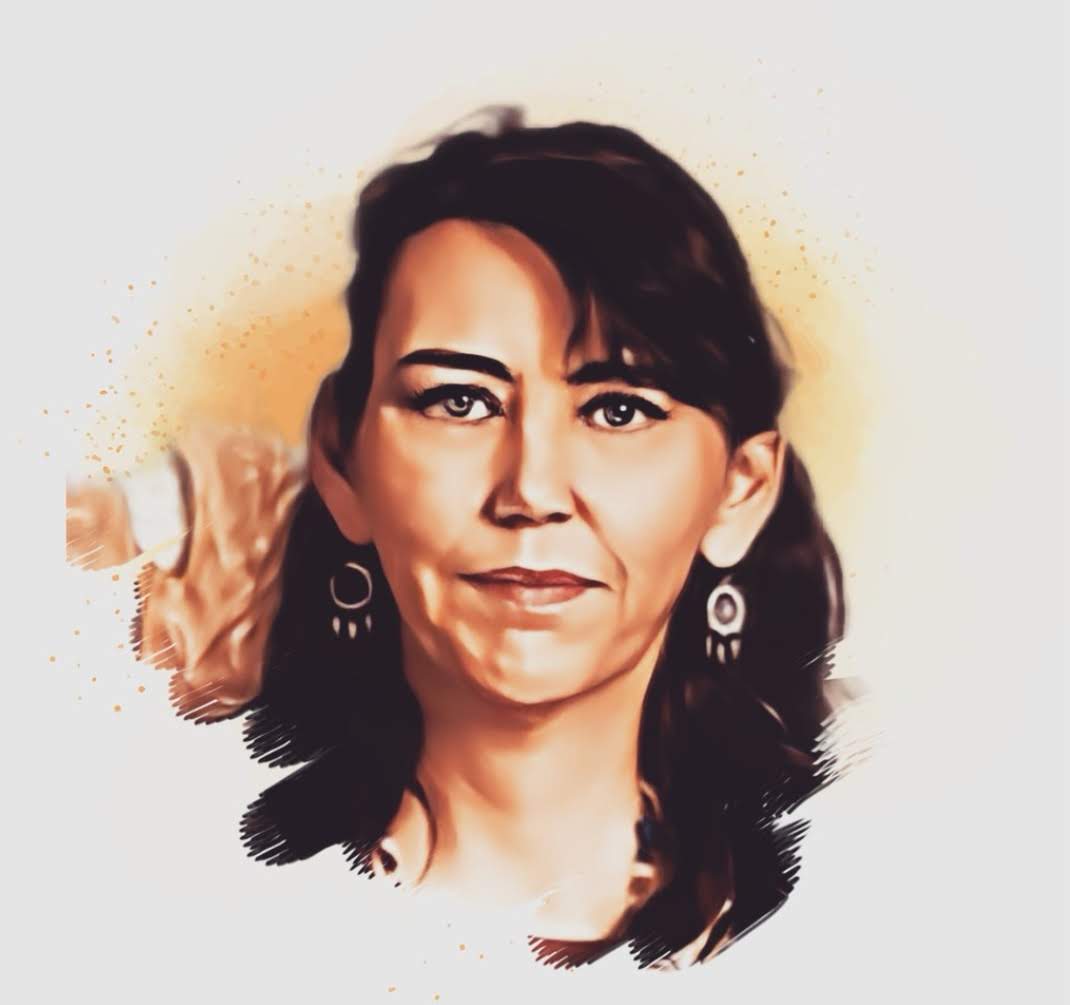
Who’s Land is This? The Gatehouse resides on the traditional land of the Mississaugas of the Credit First Nations, Huron-Wendat, Haudenosaunee, and is part of Treaty 13 territory. The Purpose of Hosting Truth and Reconciliation Day At The Gatehouse, we create space every day to confront an issue that is painful, complex, and left silently in the shadows: Childhood Sexual Abuse. On Wednesday, September 17, 2025, we extend that commitment by facing another hard truth: the legacy and ongoing impacts of Canadian colonialism. Led by Indigenous Knowledge Keepers, we will come together and honour the truths of residential schools, the loss of Indigenous languages, culture, and identity—and we recognize the continued strength and resilience of Indigenous communities.This day is about remembrance, reflection, and respect. It’s an invitation to listen, learn, and be part of the journey toward reconciliation. Why Should I Attend? If you feel anxious or unsure about whether to attend, you’re not alone, and you’re still warmly encouraged to join us from 1pm to 3pm at The Gatehouse. We strive to be a safer space where dialogue is welcomed, and making mistakes is part of learning. This event is a meaningful opportunity to deepen your understanding of Canada’s history and its lasting impacts on Indigenous communities. Held in our beautiful and revitalizing Healing Garden, the gathering supports Indigenous-led education and advocacy, strengthens community, and fosters intercultural understanding. You’ll have the honour of respectfully witnessing or participating in Indigenous ceremony: something best experienced in guided and intentional spaces like this. It’s a chance to listen, reflect, and engage with the lived experiences of Indigenous Peoples alongside others who are committed to learning and healing. Whether you’re a teacher bringing students, a family wanting to learn together, or someone looking to grow in your allyship, this event is for you. Everyone is welcome. By attending, you will be supporting both The Gatehouse and its mission to create spaces of compassion, education, and transformation, as well as guest speaker and educator, Kristi White, a proud Haudenosaunee woman, and author of Indigenous children’s books The Adventures of Jay & Gizmo. We hope you’ll be part of this meaningful day. You can register for the FREE event here: https://www.zeffy.com/en-CA/ticketing/annual-truth-and-reconciliation-in-the-healing-garden Other Resources Below you can find a wide range of resources to help supplement your knowledge about Indigenous People’s. https://principedejoyce.com/en/index https://fncaringsociety.com/jordans-principle