Many of us who survived childhood sexual abuse learned to normalize our childhoods. We also learned to normalize how our minds work. What we think, feel, or replay can come to feel like “just how I am,” rather than something shaped by what happened to us. But trauma contaminates. It contaminates how we see ourselves, how we experience relationships, how we move through the world. Most significantly, it contaminates our sense of agency—our ability to choose rather than react, to live from intention rather than compulsion. Healing is the process of decontamination. Of reclaiming your life as your own. There is no single path through this work, and no prescribed timeline. But there is a route that many survivors have found leads toward freedom—freedom from compulsive patterns, from loops we can’t control, from living in states organized around trauma that ended long ago. This arc moves through: Inner child work → Internal Family Systems (IFS) → Understanding parts → Recognizing loops → Attachment repair. Each step builds on the last. Each one matters. And the destination is the same: a life that is yours, not defined by what happened to you. Inner Child Work: You Can’t Heal What You Won’t See For many survivors, healing begins with recognizing the inner child—the young part of us that was hurt, frightened, or left alone, frozen in time and carrying more than any child should have had to carry. This recognition is not metaphorical. It is literal. There is a part of you that experienced the trauma and never received what was needed to integrate that experience. Inner child work helps you turn toward that part with compassion rather than avoidance. Why this matters: You cannot decontaminate what you refuse to acknowledge. Recognition is the beginning. It opens the door to everything that follows. But for many survivors, this is not the end of the work—it is the beginning. Internal Family Systems: You’re Not Broken—You’re a System That Adapted As healing deepens, many survivors discover something important: the inner child is not alone inside us. Trauma changes how the mind organizes itself. Parts of us separated in order to survive. Some parts carry the pain. Other parts work to contain it, distract from it, or keep us functional despite it. This is where Internal Family Systems (IFS) therapy often enters the healing arc. IFS, developed by Richard Schwartz, provides a framework for understanding these parts—not as disorders or pathology, but as protective adaptations that formed in response to overwhelming experiences. Understanding who is active inside us, especially during distress, urgency, or looping, can restore choice and reduce self-blame. Why this matters: When you see that you’re not broken but organized around protection, shame begins to lift. Parts are not the problem—they were the solution at the time. This shift from self-blame to self-compassion is essential for healing to deepen. Learn more about IFS at https://ifs-institute.com. The Nervous System: Why Compulsion Isn’t a Willpower Problem To understand why parts form and why they remain active, we need to understand how trauma lives in the body. Trauma is not primarily psychological—it is stored in the nervous system. Stephen Porges’s Polyvagal Theory helps us see why certain patterns feel so automatic, why insight alone often isn’t enough, and why healing requires more than understanding what happened. “Neuroception describes how neural circuits distinguish whether situations or people are safe, dangerous, or life-threatening. Because of our heritage as a species, neuroception takes place in primitive parts of the brain, without our conscious awareness.” — Stephen Porges, The Polyvagal Theory Our nervous systems are constantly scanning for safety or threat—below conscious awareness. This is why you can “know” you’re safe now but still feel activated. Your body is responding to cues your mind doesn’t register. For survivors, neuroception was shaped during times when threat was real and protection was absent. The nervous system learned to detect danger even in safe environments. This is not anxiety or paranoia—it is an adaptation that once protected you. Why this matters: Compulsive behavior is not a failure of willpower. It is your nervous system still detecting threat and responding as it was trained to do. This understanding removes shame and opens the possibility of actual intervention—not through trying harder, but through updating the system itself. Loops: Trauma Contaminants That Steal Agency When we understand neuroception, the compulsive patterns survivors experience begin to make sense. Loops are unfinished survival or attachment signals that keep cycling. They are not character flaws. They are trauma contaminants—patterns that repeat because the nervous system never received confirmation that safety arrived or that the threat ended. Compulsive thinking is many times faster than deliberate thought. But the felt difference is even larger because compulsive thinking bypasses choice, meaning-making, and sequencing. Loops don’t ask for permission. They activate automatically, searching for situations that match unresolved threat or longing. This creates tremendous internal conflict. Parts fight with other parts. The result is exhaustion, shame, and the feeling that you are not in control of your own mind. Why this matters: Loops are the most direct way trauma contaminates present life. They keep you reactive rather than responsive. Compulsive thinking requires intervention—not self-discipline, but nervous system repair. The Sexual Reenactment Loop: The Loudest Contaminate Among the loops that survivors navigate, one stands out as particularly destabilizing: the sexual reenactment loop. Despite how it presents, this loop is not actually about sex. At its core, it is driven by unfinished survival energy combined with unmet attachment needs—most often the absence of sufficient protection, supervision, or intervention at the time of abuse. The nervous system was activated for survival, but there was nowhere safe for that activation to resolve. Sexuality is the most attachment-dependent domain of human development. When abuse occurs in the absence of protection, sexuality and attachment become fused with danger, longing, and urgency. What develops is not desire, but a seeking system—an attachment system circling without a place to land. This is why the sexual reenactment loop feels compulsive and
Rise and Cry: The Golden Hour
By: Brent McBlain The Golden Hour Every morning, before caffeine or screens, the body performs its own quiet miracle. In the first hour after waking, your nervous system and hormones move through a natural transition — cortisol rises to mobilize energy, testosterone and oxytocin peak, and the vagus nerve begins its daily rhythm of connecting and calming. This is the golden hour for healing: a short, sacred window when your defenses haven’t yet assembled, and your authentic emotional self can still be heard. Only when we are in a calm physiological state can we convey cues of safety to another.” — Stephen W. Porges, The Pocket Guide to the Polyvagal Theory During this hour, the brain hasn’t yet shifted into the analytical mode that organizes, filters, or avoids. The body is still whispering the truth it processed through the night — the grief, the longing, the fragments of memory. This is when trauma work, reflection, or simply sitting in quiet presence is most accessible. The Golden Hour and Trauma Therapy Therapies that rely on body awareness — like EMDR, somatic experiencing, and other trauma-informed approaches — are most effective when the nervous system is open and less defended. The first hour after waking offers precisely that. During this time, the brain’s limbic centers are more accessible, and the prefrontal cortex — the part that intellectualizes, rationalizes, or suppresses emotion — has not yet taken over. This is why EMDR sessions scheduled early in the day often access deeper emotional memory with less resistance. The golden hour becomes the bridge between the sleeping and waking mind — a time when memory, sensation, and emotion still speak the same language. “If our nervous system detects safety, then it’s no longer defensive. When it’s no longer defensive, the circuits of the autonomic nervous system support health, growth, and restoration.” — Stephen W. Porges When we align therapy with this natural openness — before caffeine, before performance mode — we are working with the body’s rhythm rather than against it. Why Before Coffee Caffeine is not the enemy, but it changes the chemistry of access. It raises cortisol, accelerates heart rate, tightens muscles, and can push a trauma-sensitive nervous system into mobilization before safety is established. “Mindfulness requires feeling safe. Because, if we don’t feel safe, we are neurophysiologically evaluative of our setting, which precludes feeling safe.” — Stephen W. Porges For many survivors of high ACEs or chronic stress, coffee transforms emotional openness into rigidity or irritability. It can close the gateway to tears — the very language of release. By waiting until after the golden hour for caffeine, you allow the parasympathetic system to do its first task of the day: reconnect you with yourself. Hormones and the Morning Window Men: Testosterone peaks in early morning and declines 20–25% by late afternoon. This natural surge supports emotional strength and repair if it isn’t overridden by excess sympathetic arousal. For older men, whose hormonal amplitude is lower, delaying stimulants helps preserve balance and gentleness.

Sexual Identity: There Is No One Way To Be You
One of the most harmful myths at the intersection of sexuality and childhood sexual abuse (CSA) is the belief that non-heterosexual identities are caused by trauma. This myth, rooted in a heteronormative society, suggests that survivors of CSA become queer as a result of violence — but research shows there is no direct causal link between CSA and adult sexual orientation. Another critical concept in understanding sexuality after trauma is compulsory heterosexuality, a term introduced by influential feminist theorist Adrienne Rich in her essay Compulsory Heterosexuality and Lesbian Existence. Rich challenges the assumption that heterosexuality is biologically innate, writing, “The assumption that women are ‘innately’ sexually oriented toward men… [and] that the lesbian is simply acting out of her bitterness toward men… are widely current in literature and in the social sciences. Rich also critiques the societal machinery that channels women into heterosexuality, writing that many overlook “the covert socializations and the overt forces which have channelled women into marriage and heterosexual romance… from the selling of daughters to the silences of literature to the images of the television screen.” When the social narrative is that heteronormativity is superlative, and expected, this can make it difficult for survivors to trust or validate their own identities that fall outside of that norm. CSA often occurs during a developmental stage when children are still learning about themselves and all their many identities, values and beliefs. When a child doesn’t yet know their sexual identity, and are still finding their voice and that is taken away with sexual violence, it can feel like the trauma “made us gay” or altered our sexual identity in a way that we haven’t come to terms with. While trauma does not define our sexual identity, it can influence how we come to understand and navigate it — especially in a society that enforces rigid norms around gender and sexuality. Survivors are often left to navigate confusion, shame, and internalized heteronormativity—pressures society imposes long before a person can fully explore or claim their truth. Non-heterosexuality is not a reaction to harm or a form of bitterness toward the perpetrator. That belief not only reinforces the harmful notion that sexuality is a choice, but also strips survivors of the power to define themselves. No one else has the authority to tell you who you are. That is yours alone. Trauma may place roadblocks along your path and shape how you come to know yourself, but it does not define you. Rich calls assimilation “the most passive and debilitating of responses to political repression, economic insecurity, and a renewed open season on difference.” In the context of CSA, many survivors may retreat into heteronormativity as a survival strategy—clinging to socially “safe” identities that feel less risky to disclose. This retreat is not weakness; it’s a response to trauma and systemic pressure. Survivors are often ignored, disbelieved, or blamed. The weight of trauma can fracture their sense of self, teaching them to disconnect from their inner voice and their physical body. Understandably, it can feel overwhelming to then accept and share an LGBTQ+ identity. How do you begin to trust your understanding of your sexuality when you’ve been taught to silence yourself — to question your own truth? A small step you can take is by asking yourself, what is your best hope you’ll get out of being open and honest with yourself? Sometimes, the first step is simply letting yourself hear your own voice. Peer support groups, like those offered by The 519 and PFLAG Toronto, can be a safe place to begin that journey. Another possible step that you can do quietly for yourself, is read about sex and sexuality. While I haven’t read this book yet, I’m hoping to explore it for further insight, and you might want to as well: Reclaiming Pleasure: A sex positive Guide for moving past Sexual Trauma and Living a Passionate Life If you’re interested in hearing the author speak on this topic before diving into the book, you can check out the link below: https://www.buzzsprout.com/1662151/episodes/9517533 Another book, one I have read, is titled Come As You Are. While it’s not directed towards CSA survivors specifically, it offers impactful knowledge to support the readers in understanding themselves, their body so they can engage in sex that is empowering and enjoyable. Because there is no one way to be you. If you decide to explore these books, we’d love to hear what resonated with you — or what didn’t. Sharing your reflections can help others on their path, too.

The Hidden Truth About Shame: Why You’re Holding What’s Not Yours
What is Shame, and Why Do We Feel It? Shame feels like an awful emotion, but it does serve a purpose. Shame signals that we may have violated the unspoken code of the group we belong to—and that we’re at risk of being rejected or excluded. Guilt stems from acting in a way that goes against your values and morals. Simply put, shame is the feeling, “I am bad” and guilt is the feeling, “I did something bad”. While shame can teach us about boundaries and social expectations, it becomes devastating when we feel it, listen to it, and believe it—even when we have done nothing wrong. Shame can become an overpowering voice in our minds. As Brené Brown writes in IThought It Was Just Me (But It Isn’t): “We cannot change and grow when we are in shame, and we can’t use shame to change ourselves or others.” https://brenebrown.com/book/i-thought-it-was-just-me/ How Shame Manifests in CSA Survivors Survivors of childhood sexual abuse often carry deep shame and guilt—emotions that were never theirs to hold. But why do they? Many survivors internalize thoughts like, If I had acted differently, I could have stopped it, or If I hadn’t done that, it wouldn’t have happened. Either way, the blame gets turned inward. The survivor feels responsible for the harm done to them. This is the voice of shame. And shame isolates. Over time, it distorts memory and confidence: Maybe I misremembered and maybe it wasn’t that bad. Survivors may also experience guilt, not just about the abuse, but about the idea of disclosing it:I don’t want to bother anyone by sharing my experience. I don’t want to hurt my family or ruin relationships if I say something. These thoughts are all shaped by guilt and shame, but these do not belong to the survivor. They never did. The Harm of Comparing Pain To understand how shame is reinforced by the culture around us, we can look to writer and educator Clementine Morrigan, who shares: “Culturally we dismiss sexual comments to and about children as ‘inappropriate’—but certainly the adult wouldn’t really do anything. Accusing someone of being a pedophile or an incester is such a serious accusation that we play it ‘safe’ and wait to say anything until it seems the line will really be crossed.” When we create the kind of “line” Clementine discusses—a threshold that must be crossed before we take harm seriously—we also create a harmful hierarchy of trauma: the worst, the not-as-bad, the barely worth mentioning. This framing minimizes space for survivors to come forward. It plants thoughts like: Other people have it worse or what happened to me isn’t bad enough to talk about. This comparison culture silences voices. It breeds shame, self-doubt, and uncertainty, and it leaves survivors feeling that their pain doesn’t qualify for attention, support, or healing. Culture’s Role in Silencing and Minimizing This silence doesn’t emerge by accident, it’s shaped by social norms and behaviours that minimize harm. Clementine continues, “What I am saying is that once any sexual behaviour has been enacted toward a child, the line is already crossed.” We cannot continue living under the illusion that sexual abuse doesn’t happen. No one wants to believe someone they know is capable of such harm—but turning a blind eye is just as dangerous. In an effort to stay comfortable, we often ignore behaviours that signal something more troubling. We hesitate to say things like, “If my child doesn’t want a hug, she doesn’t have to give one.” Instead, we prioritize politeness—our own social ease—over the safety and autonomy of children. When we do this, we teach children that their bodies are not truly their own. We condition them to ignore their discomfort in favour of pleasing others. And that is not just dangerous—it’s a betrayal. What Children Know, and What We Ignore Clementine writes: “Children are not stupid. They understand danger. They receive messages from their bodies telling them that something is wrong and they have to find a way to make sense of and respond to these messages. Fight, flight, fawn, freeze, submit. These embodied survival responses take place in a context of pervasive denial, silence, punishment, and shame.” Culturally, we must be held accountable for creating a world where children feel unsafe, where their voices are ignored—and then allowing them to grow into adults who still feel unsafe, and unheard. Shame and guilt are not burdens survivors of childhood sexual abuse should ever have to carry. These emotions belong to the adults who failed them. The shame lies not with the survivor, but with a culture that chose comfort over courage, denial over truth. “The child must go to extremely creative lengths (usually involving some splitting of the personality) in order to survive these insane conditions.” — Clementine Morrigan We live in a culture of childism—the belief that adults always know best. We assume children are unintelligent, incapable of understanding, or exaggerating. But as Morrigan makes clear, children are not dumb. They know how to survive. When children are taught to be silent and compliant, they grow into adults who carry those same burdens. They’ve been trained to shut up, do as they’re told, and believe that speaking up will only bring punishment. When we ignore the voices of children, we continue the narrative that they don’t matter—that their experiences and pain are theirs to carry alone. Shame on us. A Message to Survivors While it may be hard to accept right now—and it may take time—know this: you did not do anything wrong. You did the best you could with what you had. You didn’t fail. You were let down by others. And still, you survived. When you are ready, let your inner light shine so brightly that it burns through the cocoon of shame, and emerge in your full strength.
Nature as a Steady Companion in Healing
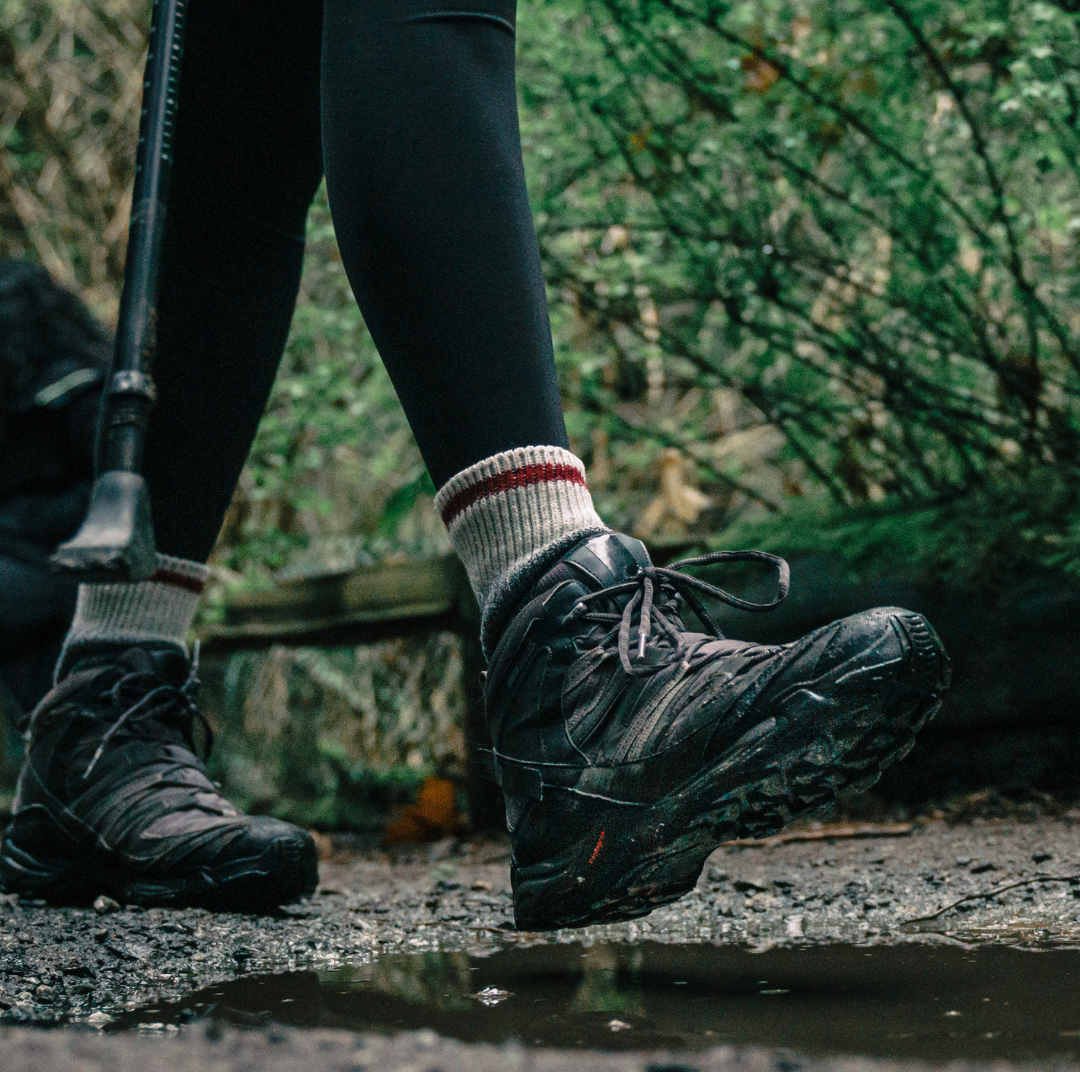
For many survivors of childhood sexual abuse (CSA), the journey of healing can feel uncertain and unsteady—like walking on shifting sand. The trauma experienced in childhood can fracture a person’s sense of self, stability, and connection, not only with others but also with their own body and the world around them. In the midst of this long and often difficult process of recovery, nature offers something quietly powerful: steadiness. Nature Does Not Demand Explanations Nature is a safe witness just as Lee Lyttle writes in his book Wounded Healer: “When I cried, the trees stared at me and simply listened. I felt secure, I wasn’t judged (p.30).” Nature accepts us unconditionally in a way that can be challenging to find in human relationships. Being outdoors, especially in quiet and natural places, can provide a place to express oneself, feel oneself without intrusion or judgement. For many survivors, this is a crucial step in feeling safe again: to be seen, without having to explain, justify, or defend. In this natural playground, we can observe and learn from nature’s processes: trees don’t hurry to bloom; rivers carve through stone over centuries; leaves are shed for new ones; forest fires cleanse, creating space for new, stronger foliage. Nature’s cycles of death and rebirth, removal for new growth, reflect the human journey into healing: our sense of self continually shifts. We, too, shed the dead leaves of shame and guilt in the hope of budding new leaves of empowerment. Nature imparts that it’s okay to move slowly; there is no urgency to “move on” from trauma. Healing is not linear. Like a tide, healing has ebbs and flows, and like the earth, we are allowed to change gradually, to rest, to fall apart, and to grow again. Nature is an Anchor Trauma, especially CSA, often disrupts the relationship we have with our own bodies. Many survivors may feel numb, disconnected, or unsafe in their physical selves. Nature gently invites us back to the body through sensory experiences that feel grounding and real. Nature acts like an exploratory playground survivors can engage with at their own pace. “These experiences in Nature are where I learned I had some control and when I explored, nothing stopped me, and nothing judged me. The environment just seemed to sit and watch me playing. Sometimes I shifted leaves and grass around to examine the light of the sun and create my own shadows. My time in Nature was, and continues to be, limitless (Lyttle, p.29).” For those who have experienced the instability of trauma, there is comfort and anchoring in simply touching the earth. Feeling your feet in the grass, sitting against a tree trunk, or feeling the softness of a flower petal. The earth and all of its offerings holds us without question. If you are a CSA survivor, please know this: you are not broken. You are healing in your own time, in your own way. And the natural world is walking alongside you. The ground beneath your feet is more than support. It is a steady companion.
The 7 Grandfather Teachings and How They Can Support Healing
The Seven Grandfather Teachings are powerful guideposts rooted in Anishinaabe tradition, offering timeless wisdom for living in balance with oneself, others, and all of creation. While not all Indigenous Nations teach or interpret these teachings in the same way, many recognize their relevance as part of a broader spiritual and cultural framework. These teachings aren’t just for reflection—they are a call to action. If we embodied them in our lives—at home, at work, and in our relationships—the way we connect to each other, to the land, and to ourselves might profoundly shift. For survivors of childhood sexual abuse (CSA), the Seven Grandfather Teachings offer a compassionate, strength-based lens for reclaiming power, voice, and belonging. Using the Nottawaseppi Band of the Potawatomi Federal Tribal Government website’s (Seven Grandfather Teachings | NHBP) guide to the Seven Grandfather teachings, let’s explore how each teaching can serve as a gentle companion on the healing journey: Love Respect “There should be no part of creation that should be excluded from the honor that we are to give.” Respect reminds us that every person has inherent value. That includes survivors. When we acknowledge someone’s truth, we show them respect. When we respect ourselves—our limits, our needs, our past—we create space for healing. Respect is the antidote to shame. It’s how we reclaim dignity and self-worth after trauma. Bravery “We face life with the courage to use our personal strengths to face difficulties, stand tall through adversity, and make positive choices.” Bravery doesn’t always look bold. Sometimes, it’s just surviving the day. Sometimes, it’s sharing your truth out loud for the first time. For survivors, bravery is in every small act of healing—asking for help, saying “no,” setting a boundary, or simply waking up and continuing Truth “We must understand, speak, and feel the truth, while also honoring its power.” Truth is often uncomfortable, but essential. Naming what happened is part of reclaiming our voice. Denial can protect us temporarily, but long-term healing asks us to face what hurts so we can begin to release it. Living in our truth, even when it’s painful, brings us closer to our authentic selves—and to the future we deserve. Honesty “We must allow truth to be our guide. We must first be honest with ourselves. This will allow us to be honest with others.” Honesty means acknowledging our feelings and experiences without minimizing them. It takes courage to look inward and say, “This happened, and it mattered.” Honesty is the bridge between truth and connection. It helps us build relationships rooted in integrity and authenticity—starting with ourselves. Humility “We should never think of ourselves as being better or worse than anyone else.” Trauma can create isolation. Survivors often carry the belief that no one else could possibly understand. Humility reminds us that we’re not alone. We’re not worse or less than anyone else. We are part of a much larger human story—each of us figuring out life as best we can. When we embrace humility, we create space to grow, to make mistakes, and to feel connected to others and to something greater than ourselves. Wisdom The Seven Grandfather Teachings are lifelong companions. They invite us to live with intention, to honor ourselves and each other, and to deepen our connection with the natural world. For survivors of CSA, these teachings offer a language for healing that is rooted in dignity, balance, and strength.

Rooted Resilience: Returning to Nature
What is happening when we find ourselves immersed in nature—when we notice the profound absence of city sounds, replaced by a silence alive with birdsong, the whisper of wind through trees, the rustling of leaves, and perhaps the soft lapping of water on a shore or the gurgle of a flowing river? What happens when we are out there and suddenly feel like we can finally exhale, as if we can breathe a long-awaited sigh of relief? According to the Logos Healing Institute what we’re experiencing is that “Nature’s rhythmic patterns and soothing sensory stimuli act as a gentle regulator, helping to restore balance to the nervous system. The gentle rustle of leaves, the rhythmic lapping of waves, or the warm embrace of sunlight can all serve as anchors, guiding survivors back to a state of equilibrium through their senses in a way that words can never do.” Through this, our bodies can begin to return to a state of regulation. If you’ve ever seen a tree grow around an obstacle in its way, you’ve witnessed the resilience of nature. In many ways, nature reflects survivors’ own capacity for resilience. As the Logos Healing Institute so beautifully expresses: “Resilience is the ability to weather storms and thrive amidst adversity. Nature can be a source of continued inspiration and growth. By engaging in outdoor activities such as hiking, rock climbing, or building a campfire, survivors learn new skills and also learn in new ways how resilient and strong they really are. These experiences can aid survivors in reclaiming a sense of agency over their lives and empower them to reclaim authorship of their stories.” While deep immersion in nature can sometimes be a privileged experience—requiring time, access, and resources—not everyone needs to travel far to reconnect with the natural world. Simple grounding practices, like walking barefoot on grass, writing or drawing outdoors, collecting natural materials for creative projects, or meditating beneath a tree, can strengthen both our healing and our connection to nature. Even envisioning a peaceful natural scene can help soothe the nervous system and bring us closer to balance. Keeping a plant—real or artificial for those without a green thumb—or even a photograph of a calming natural space, is known to have a similarly grounding effect. Whether we venture deep into the wilderness or simply pause beneath a tree in a city park, nature offers us quiet lessons in healing and strength. By returning to these natural rhythms—through our senses, through movement, or even through imagination—we create space for calm, regulation, and the rediscovery of our own resilience.
Health is Wealth: Invest in Yourself as a CSA Survivor
As survivors of childhood sexual abuse (CSA), many of us have spent years carrying burdens we did not choose. Healing can feel like a long and uncertain journey—but it’s important to remember this: your health is your greatest wealth. The investment you make in your emotional, physical, and mental well-being is one of the most valuable gifts you can give yourself. Survivors often put others first or avoid their own needs, but healing starts when you decide that you matter, that your well-being deserves attention and care. Just as we might save for the future or invest in our careers, we must also prioritize ourselves by tending to the wounds we carry. Your story, your body, your emotions—they all deserve nurturing, safety, and space to heal. Investing in Yourself Looks Like: A Commitment to Personal Growth and Self-Improvement At The Gatehouse, we offer a supportive, non-judgmental space for adult survivors of CSA to begin or continue this journey. You don’t have to do this by yourself. Whether it’s through our peer support programs, workshops, or survivor-led initiatives, there are compassionate people here to walk beside you. Your healing is an investment in your future—your peace, your relationships, your sense of purpose. Every step you take toward wellness is a step toward reclaiming your voice and your life. Visit thegatehouse.org to learn more about how we can support you. Because you are worthy of healing.Because health is wealth.Because you matter.
Healing With Expressive Art Therapy Part 2
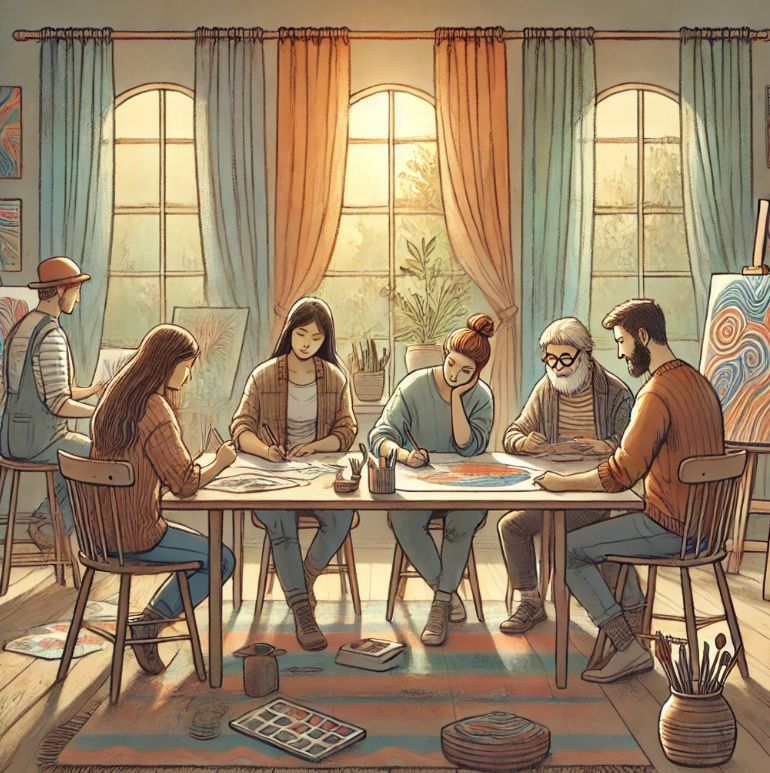
If you’ve made it this far, here’s your gift—a second arts therapy activity to explore and enjoy! Let’s dive right in and remember to be kind and compassionate with yourself as you move through this process. There’s no right or wrong outcome—only your unique expression When a strong emotion comes up, this might be a creative practice for you to process that emotion. You need 2 sheets of paper and your preferred coloring supply. Sit down comfortably and bring awareness to where you are in the present moment. You may want to take a few breaths bringing awareness to your body and noticing where you are feeling activated, and notice the sensations: what quality do they have? Are they at the surface or deep inside? Is it still or moving? Is it young, old, or ancient? Trust your instincts as you express what you feel in your body, onto the paper. If those sensations could speak, what would they say? Once you have documented all that you can notice. Take a look at what is on your paper. Is there anything you need to add? When it feels complete – ask yourself, “Am I willing for this to change in a beneficial/supportive way?” If the answer is no, thank your body for the information and check in again sometime later. If the answer is yes, you can return to a comfortable sitting position, close your eyes or have a soft gaze. Start to tune into your body with your willingness for things to change and observe, like a movie, the changes you notice. Look for changes in temperature, sensation, and movement and start to express visually, using your coloring material, what you notice. Follow the same prompts as above in how you pay attention to what is happening internally. You may notice you use different colors, shapes, and textures. When the 2nd drawing feels complete, take a few moments to reflect on it: Look at it from different angles; compare it to your first piece of paper and see what looks and feels different. Notice how differently you may feel in your body. If you wish, you can discard the first piece of paper and post the 2nd piece of paper where you will see it often. You can repeat this process as many times as needed and track the changes you feel with each version in a journal. Your body will continue to make changes as you go about your day, and as you sleep. Your willingness is the key to unlocking this process. If this was your first foray into expressive art therapy, I hope the experience was illuminating and even joyful, and that you feel inspired to return to the practice again. If you’d like additional support in your art therapy journey, you’re always welcome to register for Individual or Group Art Therapy with us at The Gatehouse.
Dancing As a Form of Healing
“If you can’t say it, you sing it, and if you can’t sing it, you dance it.” -Anonymous In an article posted on the website The Mighty, Monika Sudakov talks about how dance helped her work through her own childhood sexual abuse concluding that, “I encourage anyone, with a trauma history or otherwise, to engage in some kind of dance-like movement to music.” Dance as Freedom It is becoming widely recognized that trauma can be held in the body. Movement helps us tune into where it might be held and supports us in releasing it. For survivors of CSA, freeing the body from what it carries is an essential step toward both emotional and physical healing. Dance can be a powerful way to facilitate this release. Sudakov writes about three key impacts of dance on trauma. First, it promotes the release of feel-good hormones. She states, “Factor in the element of music in dance and you have a powerful one-two punch of reducing stress hormones like cortisol and engaging parts of the brain associated with emotional regulation.” Second, dance engages bilateral stimulation, a principle central to EMDR therapy. She explains: The fundamental tenet of EMDR, bilateral stimulation, enables one to engage both hemispheres of the brain simultaneously, allowing connections to be made that can effectively process memories that may have gotten stuck. Body movement where alternating sides of the body are worked in sequence is one of these. Therefore, dance engaging repetition from one side of the body to another can effectuate a similar result. (Sudakov, 2024) Third, dance supports the vagus nerve function, which is often disrupted by trauma. Sudakov notes: It is well known that trauma can disrupt vagus nerve function, causing dysregulation of everything from digestion to mood. Two of the best ways to stimulate positive vagal functioning are through exercise and deep, slow breathing, both of which are integral aspects to dance.(Sudakov, 2024). Ecstatic Dance If dance sounds intriguing, one such form of dance is called ecstatic dance, a form of moving meditation where you allow yourself to dance to the energy of music like a hill that you slowly climb, reaching a peak, and then descend. You can look for local ecstatic communities, such as Ecstatic Dance Toronto. If there aren’t any local communities near you, the wonderful news is you can do this in your own home with your own curated playlist. Give it a try and express your feelings from the day or week! While ecstatic dance allows for free-form movement and emotional expression, some people may prefer a more structured approach to movement as a healing practice. One such method is 5 Movement Dance, which follows a ‘wave’ or pattern of music, suggestive of 5 moods or rhythms: flowing, staccato, chaos, lyrical and stillness. Unlike ecstatic dance, not only does the facilitator play the music, they also interact with the dancers, encouraging and reminded participants to breathe and bring attention to their emotions and bodily sensations. If this sounds interesting but also a bit overwhelming, remember that dance is about self-expression. There is no wrong way to connect with music and movement. In these spaces, everyone is free from judgment, encouraged to listen to their body, heart, and soul. Sudakov, M., So You Think You Can Dance to Process Trauma, The Mighty, July 17th 2024. Is Ecstatic Dance and 5 Rhythms the Same Thing, Flo Motion, March 17th 2023.