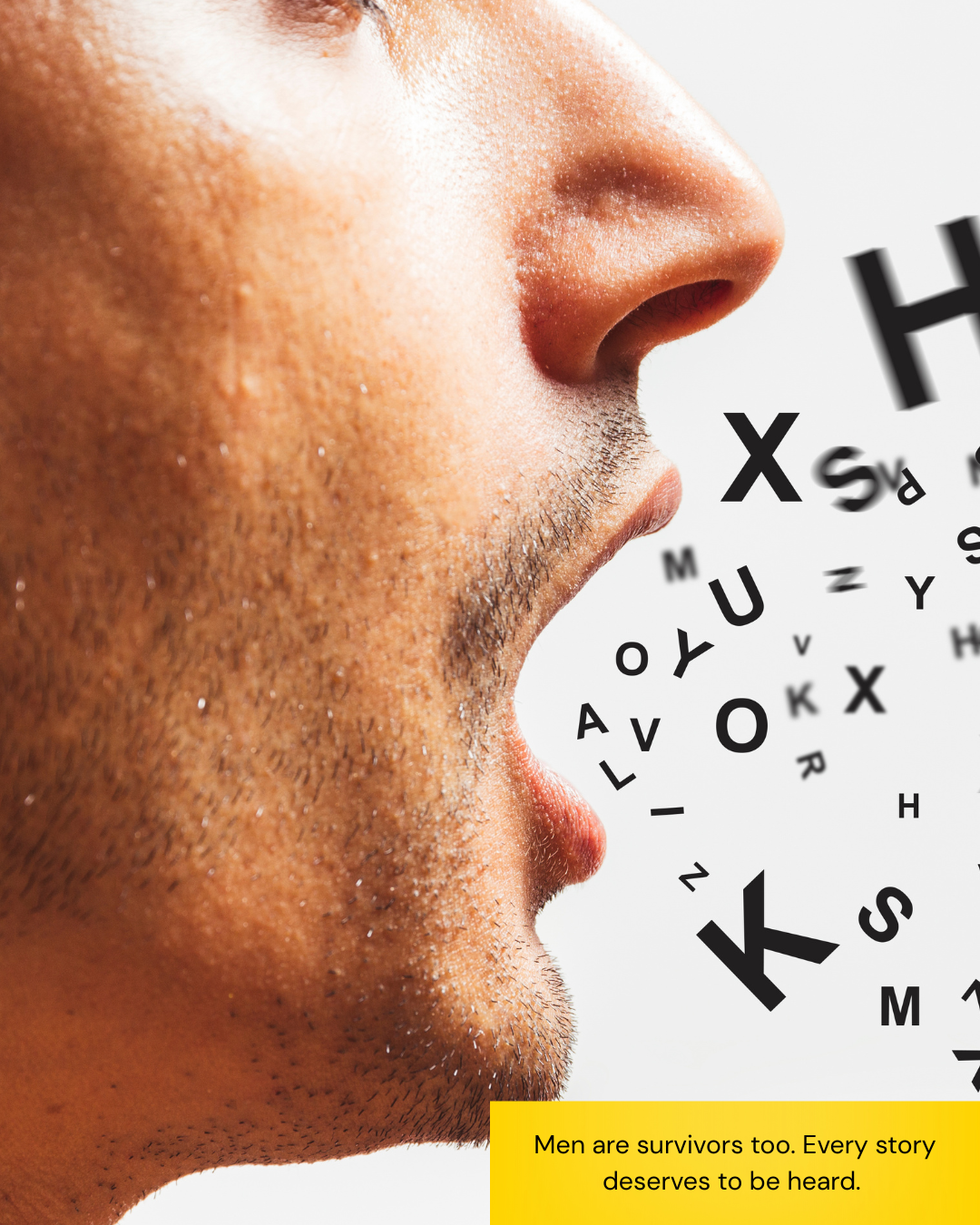
When the person who harmed you is someone you love and trust, the idea of disclosure can feel like standing at the edge of a chasm—impossible to cross.
What will happen if I don’t let my voice be heard? And what will happen when I do? Sometimes, nothing happens. And that silence says everything about our culture.
Other times, disclosure is like an earthquake. It shatters the foundation of your life. Relationships break apart under the weight of disbelief, mistrust, confusion, anger, and grief. And at the heart of it all is the survivor, trying to make sense of everything.
Aftershocks and Blame
Survivors often feel like they’re the cause of the fallout—as if they’ve ruined something by speaking up. They haven’t. They’re not the cause. They are survivors, managing the aftershock of something that was never their fault.
When people respond to disclosure in ways that are re-traumatizing, it can be tempting to silence ourselves again, or feel regretful for speaking up. They begin to wonder if it was worth it.
Other responses can be mixed messaging by the receiver: they can say they believe you, but act like they don’t. Or, they believe you but expect you to move on quickly; or they believe you and then never talk about it again. Leaving the individual suspended in tentative safety. And Tentative safety is NOT safety.
The Reality of Disclosure
When survivors stay silent, the pain often doesn’t disappear, but burrows deeper into the body. Telling your story can be liberating. For some, it’s the first concrete step toward healing. However disclosure doesn’t always bring instant relief.
Sometimes the expectation is that speaking up will make everything feel better. In truth, it can feel more like looking at a wound: You assess, then take the steps you need to heal it.
But it still hurts, it’s still unpleasant to examine, and it needs time.
Making Sense of Loss
Like resetting a broken bone—an intentional kind of hurt, scary, unavoidable, and necessary—so too is the healing journey after disclosure. Some relationships, especially those that have become emotionally necrotic, may need to be realigned or, in some cases, removed altogether. This might mean letting go of long-time friends or even family members. Even harmful connections were still connections. And loss—even when it keeps us safe—still hurts. Recovery from that kind of loss is like emotional physical therapy: uncomfortable, frustrating, and slow. But without it, we don’t regain our strength.
The Crash After Speaking
There can be an immense emotional crash after disclosure.Exhaustion sets in, not just from telling the story, but from everything it disrupts. Disclosure can force people to confront things they’d rather keep buried: their own complicity, their own guilt, their own understanding of who they are in relation to you.
And in that space, the survivor can feel more alone than ever—vulnerable, changed, and aching for support in a world laid on shifting sands. There is likely uncertainty around what comes next. A question of how to continue the healing journey. New feelings may emerge: relief, grief, anger, and what-ifs. Another aftershock.
Whether You’ve Disclosed…Or Not.
No matter what your circumstance regarding disclosure, please remember:
You are not responsible for other people’s inability to face the truth.
You are not too much.
You are not alone.
You spoke because you were brave.
And that bravery deserves care—not punishment.