
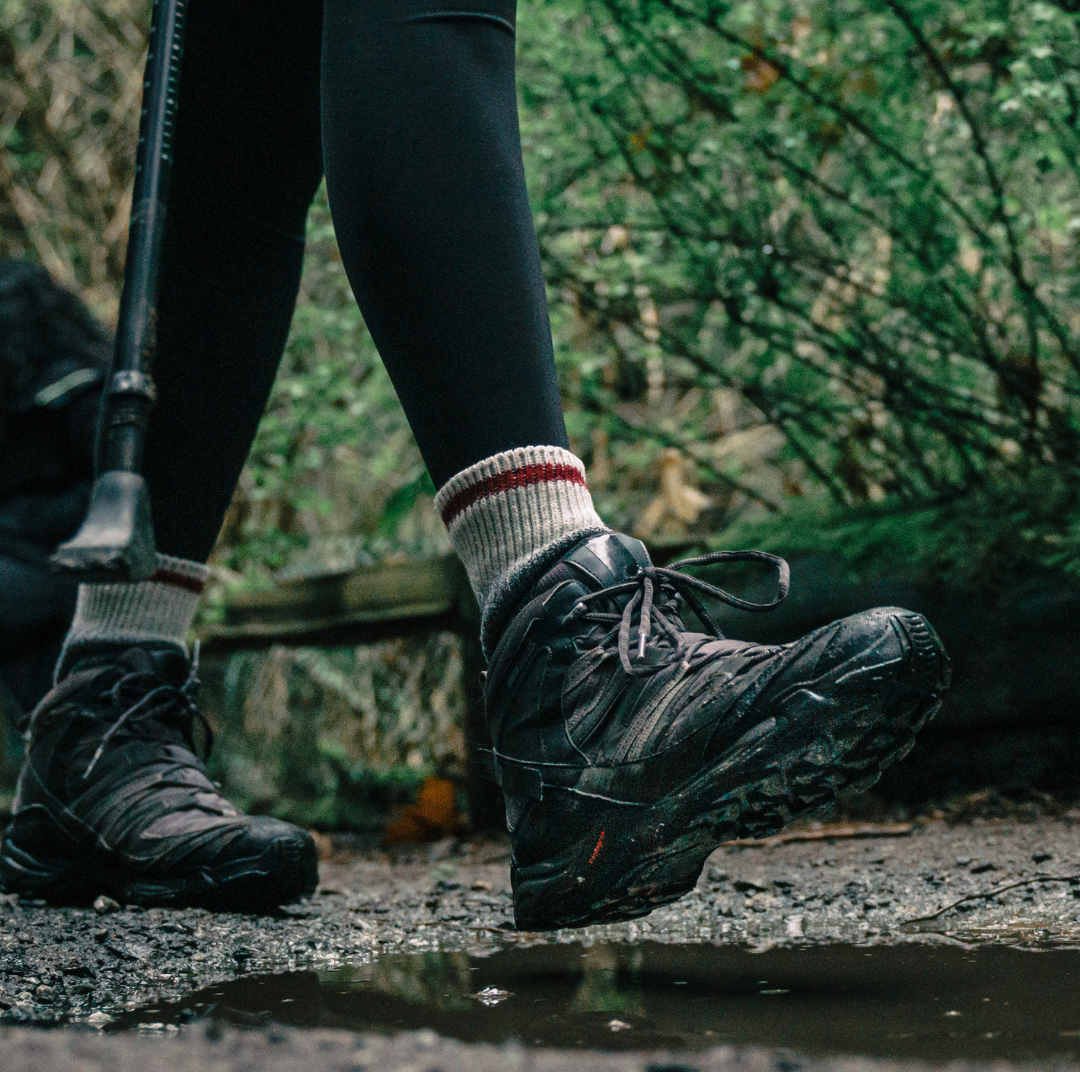
Pour de nombreuses survivantes d’abus sexuels durant l’enfance (ASS), le chemin de guérison peut sembler incertain et instable — comme marcher sur du sable mouvant. Le traumatisme vécu dans l’enfance peut fracturer le sens de soi, la stabilité et la connexion d’une personne, non seulement avec les autres, mais aussi avec son propre corps et le monde qui l’entoure. Au milieu de ce long et souvent difficile processus de rétablissement, la nature offre quelque chose de silencieusement puissant : la stabilité. La nature n’exige pas d’explications La nature est un témoin sûr, tout comme l’écrit Lee Lyttle dans son livre Wounded Healer : « Quand je pleurais, les arbres me regardaient et écoutaient simplement. Je me sentais en sécurité, je n’étais pas jugée (p.30). » La nature nous accepte inconditionnellement d’une manière qui peut être difficile à trouver dans les relations humaines. Être à l’extérieur, surtout dans des endroits calmes et naturels, peut offrir un espace pour s’exprimer, se sentir sans intrusion ni jugement. Pour plusieurs survivants, c’est une étape cruciale pour se sentir à nouveau en sécurité : être vus, sans avoir à expliquer, justifier ou défendre. Dans ce terrain de jeu naturel, nous pouvons observer et apprendre des processus de la nature : les arbres ne se pressent pas de fleurir; les rivières creusent la pierre au fil des siècles; les feuilles sont laissées pour en faire de nouvelles; Les feux de forêt purifient, créant de l’espace pour un nouveau feuillage plus solide. Les cycles de mort et de renaissance de la nature, de retrait pour une nouvelle croissance, reflètent le parcours humain vers la guérison : notre sens du soi change continuellement. Nous aussi, nous laissons tomber les feuilles mortes de la honte et de la culpabilité dans l’espoir de naisser de nouvelles feuilles d’autonomisation. La nature m’enseigne qu’il est acceptable d’avancer lentement; Il n’y a aucune urgence à « passer à autre chose » après un traumatisme. La guérison n’est pas linéaire. Comme une marée, la guérison a des hauts et des bas, et comme la terre, on nous permet de changer graduellement, de nous reposer, de nous effondrer et de grandir à nouveau. La nature est un ancrage : le traumatisme, surtout les abus sexuels sur la sexualité sexuelle, perturbent souvent la relation que nous avons avec notre propre corps. Beaucoup de survivants peuvent se sentir engourdis, déconnectés ou en insécurité physiquement. La nature nous invite doucement à revenir au corps à travers des expériences sensorielles qui semblent ancrées et réelles. La nature agit comme un terrain de jeu exploratoire auquel les survivants peuvent s’engager à leur propre rythme. « Ces expériences dans la nature sont là où j’ai appris que j’avais un certain contrôle et, quand j’explorais, rien ne m’arrêtait, rien ne me jugeait. L’ambiance semblait juste rester assise à me regarder jouer. Parfois, je déplaçais les feuilles et l’herbe pour examiner la lumière du soleil et créer mes propres ombres. Mon temps dans la Nature était, et continue d’être, illimité (Lyttle, p.29). » Pour ceux qui ont vécu l’instabilité du traumatisme, il y a du réconfort et un ancrage à simplement toucher la terre. Sentir ses pieds dans l’herbe, s’asseoir contre un tronc d’arbre, ou sentir la douceur d’un pétale de fleur. La terre et toutes ses offrandes nous tiennent sans question. Si vous êtes un survivant d’abus sexuel dans les enfants, sachez ceci : vous n’êtes pas brisé. Tu guéris à ton rythme, à ta façon. Et le monde naturel marche à tes côtés. Le sol sous tes pieds est plus qu’un simple soutien. C’est un compagnon constant.

1 Simple Way You Can Reduce Anxiety: P.A.U.S.E
In today’s hyper-connected world, the constant buzz of social media can feel overwhelming. As a survivor of childhood sexual abuse, navigating the barrage of notifications, opinions, and comparison traps can be particularly activating. At The Gatehouse, we embrace the importance of a simple yet powerful concept: P.A.U.S.E. What is P.A.U.S.E? P.A.U.S.E. stands for Paying Attention Unveils Sacred Experiences and is attributed to Arthur Lockhart, the Founder of The Gatehouse. It’s a simple yet profound way of transforming how I respond to the obstacles that come up in daily life. Those obstacles can show up in countless ways—someone yelling at me, feeling stuck in traffic, being late for a meeting, not feeling heard, getting frustrated by someone cutting me off on the highway, or even feeling taken advantage of. The list of obstacles can seem endless. The PAUSE exercise encourages me to slow down and create space for reflection and healing. When it comes to social media, PAUSE is a deliberate, conscious choice to step away from all the noise and reconnect with my thoughts and emotions. I’ve found that social media can feel like an endless loop of opinions, judgments, and unrealistic expectations. But by choosing to PAUSE, I reclaim my power to decide what truly deserves my attention. Why Social Media Can Be Overwhelming Social media thrives on engagement, but that engagement comes at a cost. Algorithms are designed to keep me hooked, making it difficult to disengage even when the content feels harmful or activating. The comparison culture and toxic positivity I encounter online can sometimes make me feel inadequate or invalidated, especially when my healing journey looks different from what others portray How to practice PAUSE Effectively 1. Set Boundaries: I find it helpful to define specific times of the day to check social media and stick to them. Outside of those windows, I give myself permission to log off. 2. Mindful Awareness: I notice how social media makes me feel. If I’m feeling anxious or overwhelmed, it’s a sign it’s time to PAUSE. 3. Breathing Exercises: Slow, deep breaths help me ground myself in the present moment, making it easier to detach from social media’s pull. 4. Disconnect to Reconnect: Turning off notifications or temporarily disabling apps helps me avoid the constant urge to check them. I use that time to journal, meditate, or simply sit in stillness. 5. Reflect and Reassess: After a PAUSE, I ask myself: Does my mind feel clearer? Is my emotional state more balanced? Revisiting these questions regularly helps me stay in tune with my healing journey. The Benefits of Embracing PAUSE Practicing PAUSE has allowed me to break free from the digital noise and find clarity within myself. This quiet space helps me: · Promote emotional healing · Reduce anxiety and overwhelm · Enhance personal growth · Focus on what truly matters Finding Your Balance At The Gatehouse, we encourage participants to explore the concept of PAUSE as part of their healing journey. The digital world may be loud, but I have the power to lower the volume. It all begins with a moment of PAUSE. Taking a break from social media isn’t about abandoning technology altogether. It’s about intentionally creating moments of stillness and clarity amid the chaos. When I embrace PAUSE, I give myself the gift of calm reflection and a chance to reconnect with my own thoughts and feelings. This simple practice is a powerful step toward healing and well-being, helping me focus on what truly matters If you’re feeling overwhelmed by social media, consider exploring mindfulness practices or seeking support at The Gatehouse. Healing is a journey, and every step counts.

La santé, c’est la richesse : investissez en vous-même en tant que survivant d’abus sexuels sexuels (ASE)
En tant que survivantes d’abus sexuels durant l’enfance (ASS), beaucoup d’entre nous ont passé des années à porter des fardeaux que nous n’avons pas choisis. La guérison peut sembler un long et incertain parcours — mais il est important de se rappeler ceci : votre santé est votre plus grande richesse. L’investissement que vous faites dans votre bien-être émotionnel, physique et mental est l’un des cadeaux les plus précieux que vous puissiez vous offrir. Les survivants mettent souvent les autres en priorité ou évitent leurs propres besoins, mais la guérison commence quand vous décidez que vous comptez, que votre bien-être mérite attention et soins. Tout comme nous pouvons économiser pour l’avenir ou investir dans notre carrière, nous devons aussi nous prioriser en soignant les blessures que nous portons. Votre histoire, votre corps, vos émotions — tout cela mérite d’être soigné, de la sécurité et de l’espace pour guérir. Investir en soi-même ressemble : un engagement envers la croissance personnelle et l’amélioration de soi À The Gatehouse, nous offrons un espace de soutien et sans jugement pour que les adultes survivants d’abus sexuels sexuels sexuels vivent puissent commencer ou poursuivre ce parcours. Tu n’es pas obligé de faire ça tout seul. Que ce soit par nos programmes de soutien par les pairs, des ateliers ou des initiatives menées par des survivants, il y a des gens compatissants ici pour marcher à vos côtés. Ta guérison est un investissement dans ton avenir — ta paix, tes relations, ton sens du but. Chaque pas que vous faites vers le bien-être est un pas vers la reconquête de votre voix et de votre vie. Visitez thegatehouse.org pour en savoir plus sur la façon dont nous pouvons vous soutenir. Parce que tu mérites la guérison. Parce que la santé, c’est la richesse. Parce que tu comptes.

Self-Discovery and the Role of Journalling
Journaling is a simple yet powerful method for self-discovery, healing, and coping. When survivors of CSA journal with intention it can allow them to document their thoughts, reflect on experiences, and recognize shifts in mindset and behaviours over time. It is up to you what questions you want to ask yourself, and what areas of your life and self you want to explore. If you’re new to journalling, a great place to start is by choosing a journal that resonates with you. This can be a fun and meaningful process, as the right journal can reflect your personality and inspire you to write. An essential aspect of journaling is to make it a balanced practice, rather than reserving it only for difficult moments. If we only write during challenging times, journaling can start to feel burdensome. Instead, take time to capture the positive experiences, joys, and small victories, this creates a more uplifting and sustainable habit. Benefits of Journaling Journalling can be especially beneficial for survivors who may not have a trusted person to confide in or who are working on building their capacity for stress tolerance. It offers a private space for reflection, allowing individuals to process thoughts and emotions independently before seeking external support. Strengthening this self-awareness can foster greater clarity and resilience in navigating life’s challenges. Journalling is more than just putting pen to paper—it’s a powerful tool for self-discovery and emotional clarity. When practiced regularly, it can reveal patterns in our thoughts, emotions, and behaviors that we might not have noticed otherwise. It encourages deep reflection on our values, goals, and the things that bring meaning to our lives. Beyond self-reflection, journalling provides a safe space to process emotions that may be difficult to express elsewhere. It helps us move from that feeling of being ‘stuck in our heads’ to seeing our thoughts laid out in front of us—making them more tangible, manageable, and easier to understand. Writing things down can reduce the weight of overwhelming emotions, offering a sense of control and clarity. Through this process, we also learn to name and validate our emotions, giving ourselves permission to acknowledge our experiences instead of brushing them aside. Seeing our thoughts on the page allows us to reframe challenges, uncover new perspectives, and find meaning in difficult situations. Writing freely can also be an emotional release, easing stress and untangling complex feelings so that solutions and next steps become clearer. At its core, journalling is an act of self-trust. It helps us tune into our inner voice, fostering confidence in our decisions and strengthening the connection to our authentic selves. Ultimately, journalling is a deeply personal and flexible tool that can be adapted to various needs, whether it’s for self-discovery, emotional processing, or problem-solving. The key is consistency and a willingness to be honest with oneself, allowing thoughts and emotions to flow freely onto the page without judgement. Journalling is about showing up for yourself. Getting Started with Journaling Prompts If journalling is new for you, below are some prompts to help get you started: Embracing Journaling as a Path to Healing and Grow Journaling is a deeply personal practice that evolves with time, offering survivors a space to explore, heal, and grow. There’s no right or wrong way to journal—what matters most is showing up for yourself with honesty and self-compassion. Whether you’re processing difficult emotions, celebrating small victories, or simply reflecting on your day, each entry is a step toward deeper self-awareness and healing. By making journaling a consistent and balanced habit, you create a supportive tool that empowers you to navigate your journey with clarity and resilience.

La guérison par l’art-thérapie expressive Partie 2
Si vous êtes arrivé jusqu’ici, voici votre cadeau — une deuxième activité de thérapie artistique à explorer et à apprécier! Plongeons directement dans le vif et rappelons-nous d’être bienveillants et compatissants envers vous-mêmes tout au long de ce processus. Il n’y a pas de bon ou de mauvais résultat — seulement votre expression unique. Quand une émotion forte surgit, cela peut être une pratique créative pour vous afin de la traiter. Vous avez besoin de 2 feuilles de papier et de votre fourniture de coloriage préférée. Asseyez-vous confortablement et apportez conscience de l’endroit où vous êtes dans le moment présent. Vous pourriez vouloir prendre quelques respirations pour attirer la conscience de votre corps et remarquer où vous vous sentez activé, et remarquer les sensations : quelle qualité ont-elles? Sont-ils à la surface ou profondément à l’intérieur? Est-ce que c’est immobile ou en mouvement? Est-ce jeune, vieux ou vieux? Fais confiance à ton instinct pour exprimer ce que tu ressens dans ton corps, sur papier. Si ces sensations pouvaient parler, que diraient-elles? Une fois que vous avez tout documenté, vous pouvez remarquer. Regardez ce qui est écrit sur votre papier. Y a-t-il quelque chose que tu devrais ajouter? Quand tout semble complet – demandez-vous : « Suis-je prêt à ce que cela change de façon bénéfique ou de soutien? » Si la réponse est non, remerciez votre corps pour l’information et revenez plus tard. Si la réponse est oui, vous pouvez revenir à une position assise confortable, fermer les yeux ou garder un regard doux. Commence à te connecter à ton corps avec ta volonté de changer et observe, comme dans un film, les changements que tu remarques. Cherchez les changements de température, de sensation et de mouvement, et commencez à exprimer visuellement, en utilisant votre matériau de coloration, ce que vous remarquez. Suivez les mêmes consignes que ci-dessus dans la façon dont vous portez attention à ce qui se passe à l’intérieur. Vous remarquerez peut-être que vous utilisez différentes couleurs, formes et textures. Quand le deuxième dessin semble terminé, prenez quelques instants pour y réfléchir : regardez-le sous différents angles; Compare-le à ta première feuille de papier et vois ce qui a l’air et ce qui se sent différemment. Remarquez à quel point vous pouvez vous sentir différemment dans votre corps. Si vous le souhaitez, vous pouvez jeter la première feuille de papier et afficher la deuxième feuille où vous la verrez souvent. Vous pouvez répéter ce processus autant de fois que nécessaire et suivre les changements que vous ressentez à chaque version dans un journal. Votre corps continuera de changer au fil de votre journée et pendant votre sommeil. Votre volonté est la clé pour débloquer ce processus. Si c’était votre première incursion dans l’art-thérapie expressive, j’espère que l’expérience a été éclairante et même joyeuse, et que vous vous sentirez inspiré à revenir à cette pratique. Si vous souhaitez un soutien supplémentaire dans votre parcours en art-thérapie, vous êtes toujours le bienvenu pour vous inscrire à l’Art-thérapie individuelle ou de groupe avec nous à The Gatehouse.
Dancing As a Form of Healing
“If you can’t say it, you sing it, and if you can’t sing it, you dance it.” -Anonymous In an article posted on the website The Mighty, Monika Sudakov talks about how dance helped her work through her own childhood sexual abuse concluding that, “I encourage anyone, with a trauma history or otherwise, to engage in some kind of dance-like movement to music.” Dance as Freedom It is becoming widely recognized that trauma can be held in the body. Movement helps us tune into where it might be held and supports us in releasing it. For survivors of CSA, freeing the body from what it carries is an essential step toward both emotional and physical healing. Dance can be a powerful way to facilitate this release. Sudakov writes about three key impacts of dance on trauma. First, it promotes the release of feel-good hormones. She states, “Factor in the element of music in dance and you have a powerful one-two punch of reducing stress hormones like cortisol and engaging parts of the brain associated with emotional regulation.” Second, dance engages bilateral stimulation, a principle central to EMDR therapy. She explains: The fundamental tenet of EMDR, bilateral stimulation, enables one to engage both hemispheres of the brain simultaneously, allowing connections to be made that can effectively process memories that may have gotten stuck. Body movement where alternating sides of the body are worked in sequence is one of these. Therefore, dance engaging repetition from one side of the body to another can effectuate a similar result. (Sudakov, 2024) Third, dance supports the vagus nerve function, which is often disrupted by trauma. Sudakov notes: It is well known that trauma can disrupt vagus nerve function, causing dysregulation of everything from digestion to mood. Two of the best ways to stimulate positive vagal functioning are through exercise and deep, slow breathing, both of which are integral aspects to dance.(Sudakov, 2024). Ecstatic Dance If dance sounds intriguing, one such form of dance is called ecstatic dance, a form of moving meditation where you allow yourself to dance to the energy of music like a hill that you slowly climb, reaching a peak, and then descend. You can look for local ecstatic communities, such as Ecstatic Dance Toronto. If there aren’t any local communities near you, the wonderful news is you can do this in your own home with your own curated playlist. Give it a try and express your feelings from the day or week! While ecstatic dance allows for free-form movement and emotional expression, some people may prefer a more structured approach to movement as a healing practice. One such method is 5 Movement Dance, which follows a ‘wave’ or pattern of music, suggestive of 5 moods or rhythms: flowing, staccato, chaos, lyrical and stillness. Unlike ecstatic dance, not only does the facilitator play the music, they also interact with the dancers, encouraging and reminded participants to breathe and bring attention to their emotions and bodily sensations. If this sounds interesting but also a bit overwhelming, remember that dance is about self-expression. There is no wrong way to connect with music and movement. In these spaces, everyone is free from judgment, encouraged to listen to their body, heart, and soul. Sudakov, M., So You Think You Can Dance to Process Trauma, The Mighty, July 17th 2024. Is Ecstatic Dance and 5 Rhythms the Same Thing, Flo Motion, March 17th 2023.
Healing with Expressive Art Therapy
Art therapy can help survivors of childhood sexual abuse (CSA) express what words might not be able to. It’s about letting go of judgment and perfectionism, embracing the process, and creating simply for the joy of it. Expressive Art Therapy isn’t about making art for others, it’s about making art for yourself, to better understand yourself. And yes, that can feel vulnerable as it might stir up old emotions or unlock new ones. Expressive Art Therapy can also reconnect us with our inner child, bringing moments of pure joy. The expressive arts honour our deep longing to be seen, heard, felt and understood. We can use all the arts (visual art, voice, writing/poetry, dance/movement, drama and somatic) therapeutically to express ourselves in creative ways. Maybe art doesn’t feel intuitive to you, or maybe you don’t think of yourself as an artist. That’s okay. Let’s explore some creative activities that you can begin to explore at your own pace. Activity 1- Nature-based expression to move with grief or other emotions: Recall something from your life you would like to make peace with. You don’t need to be completely ready to make peace, you just need to be willing. Notice your willingness even if you are only a little willing and set your intention to begin this creative process to help you process, heal, let go and transform whatever it is that you are choosing to dedicate this practice to. On your walk, remember your intention. Look for flowers, grasses, leaves and especially things that nature is naturally letting go of. You may notice there are things you are drawn towards. Bring a small bag to collect anything that catches your eye. If you are taking small branches or flowers, remember to ask the plant for permission. Asking for permission recognizes that we live in reciprocity with nature. Once you have collected enough materials from nature (this can happen over a few days or weeks) you can set aside a day to start working with the materials you have gathered. Spread your gathered items on a piece of cloth, table, or floor and start to see how the materials want to be assembled. Feel free to use things from your home such as ribbons, colorful paper, and string to assemble the materials. You can assemble and work with the material in any way that allows you to be with and express the emotions you have been working with. Some people create a grief bundle or a bouquet. You can use paper or a canvas to glue the materials or make a 3-D structure. Something completely unique may want to emerge. Stay with the process and be with what you are experiencing. You can play music, light a candle, have a warm cup of tea or cacao and make this a healing ritual for yourself. You can come back to work on this over many days or you can create something in just one afternoon. Once your creation feels complete, you can be with it. Look at it and give voice to it. What would it say if it could speak to you? You can dance or move with it. You can keep this creation as long as you want, or you can return it to the earth or burn it in a fire. It is totally up to you. Notice and journal your process.
7 Trauma-Sensitive Activities to Foster Connection
As a survivor of childhood sexual abuse (CSA), stepping into the world can sometimes feel overwhelming, unpredictable, and even unsafe. The idea of socializing or trying new activities may bring up feelings of uncertainty or hesitation. However, connection—whether with others, nature, or creative expression—can be a powerful part of healing. Building meaningful connections doesn’t have to come with pressure or high expectations. There are many ways to engage with the world in a way that feels safer, and empowering. Below, we’ve outlined a variety of activities designed to help you nurture yourself and foster connection in low-stakes, supportive environments. Whether you’re looking for gentle movement, creative expression, or opportunities to meet like-minded individuals, these seven ideas provide a starting point to explore connection in a way that aligns with your comfort and pace. 1. Volunteer for a Cause That Feels Safe & Meaningful Giving back can be a powerful way to build connection without the pressure of deep personal interactions. Choose a cause that aligns with your values—whether it’s helping animals, planting trees, or assisting in a community pantry. Even if you don’t form immediate friendships, the work itself can be deeply fulfilling and help combat isolation. 2. Join a gentle, structured social group Joining a trauma-informed art class, writing workshop, or music circle allows you to express yourself in a non-verbal, safe, and healing way. Creative activities can be social but low-pressure, letting you connect with others without needing to share personal details. Consider spaces designed for quiet, shared experiences, such as a book club, meditation group, or gardening project. These allow for companionship without the expectation of deep personal sharing, making it easier to connect at a pace that feels safe. 3. Move Your Body in a Way That Feels Comfortable Physical activities like gentle yoga, nature walks, or dance can help regulate the nervous system while offering a chance to connect with like-minded individuals. Look for trauma-informed yoga or mindful movement classes where the focus is on body awareness, not performance. As healing is a personal journey and everyone moves at their own pace, you might prefer activities that offer more structure and social engagement. If you’re ready for a slightly more dynamic yet still low-pressure experience, joining a recreational sports league can be a great way to build camaraderie, develop skills, and enjoy social connection in a supportive environment. 4. Try the Smiling Experiment If social interactions feel overwhelming, start with a low-risk, high-reward activity: go for a walk and smile at as many people as you feel comfortable with. See how many smiles you receive back. Small, positive interactions can help rebuild trust in others while boosting your mood. 5. Send a card or write a letter Mail a handwritten card to a trusted family member, friend, or mentor. Writing can be a way to express connection without the pressure of a real-time conversation. A simple “I appreciate you” or “Thinking of you” can strengthen relationships and remind you that connection exists, even in small moments. 6. Connect with safe, familiar people If meeting new people feels overwhelming, start by deepening existing safe relationships. Invite a trusted friend or loved one for a simple, no-pressure activity like having coffee, watching a favorite show together, or visiting a quiet park. 7. Engage in an Online Supportive Community If in-person socializing feels like too much, online CSA survivor-friendly spaces (such as moderated peer-support groups or creative forums) can be a stepping stone to connection. Look for groups where engagement is optional, allowing you to participate at your comfort level. Remember, connection is a powerful part of healing. For more information on our peer supported programs check out https://thegatehouse.org/programs-and-services
The Transformative Power of Setting Goals for CSA Survivors
When you set goals, you’re doing more for yourself than you might realize. For CSA survivors, goal setting can play a pivotal role in the healing journey, positively impacting mental health, self-esteem, and resilience. It’s about taking control of your narrative, one step at a time, and creating a future that aligns with your values and dreams. Let’s explore how setting goals can help transform your life and well-being: Self-Esteem & Identity Achieving a goal reinforces your belief in your abilities. For CSA survivors, this can be an empowering reminder that healing and progress are possible. Working toward goals allows you to learn new skills or strengthen existing ones, fostering a sense of accomplishment. Each success builds confidence and motivates you to tackle more. The small wins matter—they remind you of your strength and determination. Goal setting invites reflection, helping you identify your strengths, acknowledge areas for growth, and connect with your personal values. Whether it’s pursuing education, trying a new hobby, or making connections, goals encourage exploration, which can be deeply healing. Mental Health Clear goals offer direction and focus, reducing the overwhelm that often accompanies healing. By prioritising what matters most, you can channel your energy into meaningful progress. Accomplishing goals releases dopamine, enhancing feelings of joy and satisfaction. For survivors, this sense of achievement can be particularly significant as it rebuilds hope and pride in oneself. Healing isn’t linear, and setbacks are part of the process. Goal setting teaches problem-solving, perseverance, and the ability to rebound from challenges. Each step forward equips you with the tools to handle future obstacles with greater confidence and patience. Relationships Personal growth through goal setting can improve communication and empathy, helping to build or rebuild meaningful relationships. Setting shared goals with trusted loved ones—like attending a support group, engaging in a wellness activity, or volunteering—encourages teamwork and strengthens bonds. As you achieve your goals, you serve as a role model for perseverance and determination. Your journey can inspire others to pursue their own paths of healing and growth. A Path to Transformation For CSA survivors, achieving goals is about more than ticking boxes—it’s about reclaiming agency over your life and embracing the possibilities of a brighter future. Each goal, big or small, is a step toward transforming your circumstances, reshaping your self-perception, and discovering new joys in life. Which of these benefits resonates most with you?How do these align with your “why” for healing and growth? Your goals are more than just milestones—they’re a testament to your resilience, strength, and commitment to becoming the person you want to be.
Refresh Your Goals: A New Year, a New You
Refresh Your Goals: A New Year, a New You As the new year begins, many of us feel the urge to hit the refresh button by setting new goals. Yet, research shows that only 9% of people achieve their New Year’s resolutions. For survivors of childhood sexual abuse (CSA), this journey can feel even more daunting due to unique challenges they face. But with proactive tools and a mindset shift, productive changes are within reach. Challenges Faced by CSA Survivors CSA survivors often encounter specific challenges when setting and achieving goals, including: Shame and Self-Doubt: Survivors may struggle with feelings of unworthiness or fear of failure, making it difficult to pursue or sustain goals. Trust Issues: Building trust in oneself and others can feel like an uphill battle, impacting relationships, work, and self-improvement efforts. Emotional Triggers: Past trauma can lead to unexpected emotional responses or avoidance behaviours, disrupting progress. Difficulty in Long-Term Planning: Trauma can affect focus and decision-making, making it harder to set or commit to long-term goals. Low Energy or Burnout: Dealing with the effects of trauma can leave survivors feeling drained, which can hinder motivation. If these resonate, know you’re not alone. At The Gatehouse, we provide programs and resources to help survivors overcome these challenges and rediscover their inner strength. Make SMART Goals Work for You SMART goals—Specific, Measurable, Achievable, Relevant, and Time-bound—can help navigate these obstacles: Specific: Be clear about what you want to achieve. For example, “I will join a weekly support group” instead of “I want to feel better.” Measurable: Track your progress. Even small wins, like attending one meeting or completing a journal entry, are worth celebrating. Achievable: Start small. Setting realistic steps helps build confidence and prevents overwhelm. Relevant: Focus on what matters most to you, like improving emotional well-being or strengthening relationships. Time-bound: Set a manageable timeline, but allow yourself flexibility. Healing is a personal journey that takes time. Discover Your “Why” Understanding the deeper purpose behind your goals can help you stay committed. Ask yourself: What does achieving this goal mean for my healing journey? How will it impact my self-worth or emotional well-being? What’s one thing I want to feel differently about myself? For example, a CSA survivor might set a goal to attend art therapy. Their “why” could be: Why? To express emotions I’ve suppressed for years. Why? To better understand my feelings. Why? To build a sense of peace and reclaim my identity. Action Plan for Survivors Turning your goals into actionable steps makes them more achievable. For instance, if your goal is to build healthier boundaries, your plan might include: Reading resources or attending workshops on boundary-setting. Practicing saying “no” to requests that feel overwhelming. Identifying safe spaces and people to practice new boundaries. By setting SMART goals, linking them to your “why,” and addressing challenges with compassion and support, you can create meaningful progress on your healing journey. At The Gatehouse, we are here to walk alongside you. Let’s make this the year of resilience, empowerment, and hope. Celebrate each step, no matter how small—it’s all part of your story. The Gatehouse is here to support survivors with programs, peer groups, and resources. Learn more about how we can help by visiting our website or contacting us at 416-255-5900 x 222.